SOUTHERN ASIA · REGION GUIDE

Rajasthan

Fort cities, desert caravans and painted palaces make Rajasthan India’s clearest introduction to Rajput history.

Book

Escapes Itineraries

Every trip we run through Rajasthan, including the ones that pass through on a longer route.

No trip runs here on its own yet

Read on — the guide below is the place, not the catalogue. Or tell us your dates and we will build one.

Ask about Rajasthan

Tell us

No trip here yet

We have not put a Rajasthan trip on the shelf yet, which is not the same as not going. Tell us what you want to see and how long you have, and your trip manager builds one around it.

Plan a Rajasthan trip

A person reads it and replies — no automated quote, and nothing to pay to ask.

Understand Rajasthan

The Story of Rajasthan

Rajput kingdoms shaped Rajasthan’s forts and courtly traditions, while Mughal alliances, Marwari merchants and British treaties connected its desert cities to wider Indian politics and trade.

Chapter 01 · ORIGIN

Kingdoms of the desert frontier

Kalibangan belonged to the Indus civilisation by about 2600 BCE, but later Rajasthan was shaped by Rajput houses including the Sisodias of Mewar, Rathores of Marwar and Kachwahas of Amber. Their rival courts controlled passes, farmland and caravan routes, explaining why the region developed several fortified capitals rather than one dominant centre.

Fact Maharana Pratap of Mewar fought Mughal forces at Haldighati in 1576.

Chapter 02 · PEOPLE

Courts, traders and desert communities

Rajput rulers supplied the courts, but Rajasthan’s cities also depended on Marwari merchants, Muslim artisans, Jain financiers, Bhil communities and camel pastoralists such as the Raikas. From the 18th century, Marwari business networks expanded from towns including Bikaner and Shekhawati across India, carrying capital and family connections far beyond the desert.

Fact The Bhil population has longstanding communities around Dungarpur, Banswara and the Aravalli hills.

Chapter 03 · FOOD

Food adapted to scarce water

Low rainfall and caravan travel favoured ingredients that stored well: millet, gram flour, dried ker berries and sangri beans. Dal baati churma pairs baked wheat baati with lentils and sweetened crumbs, while laal maas reflects Rajput hunting traditions. Merchant cities such as Jodhpur and Bikaner developed durable savouries that could survive long journeys.

Fact Ker sangri combines two desert plants traditionally gathered in western Rajasthan.

Chapter 04 · ARCHITECTURE

Fortresses became ceremonial cities

Rajput power produced ridge forts such as Mehrangarh and Chittorgarh, designed for defence and control of surrounding routes. Mughal alliances later introduced garden courts, mirror work and painted chambers at Amber. Sawai Jai Singh II’s planned Jaipur added gridded streets and the Jantar Mantar observatory, completed in 1734, linking royal authority with astronomy.

Fact Six Rajasthan hill forts entered UNESCO’s World Heritage List in 2013.

Chapter 05 · NATURE

Aravalli hills and the Thar Desert

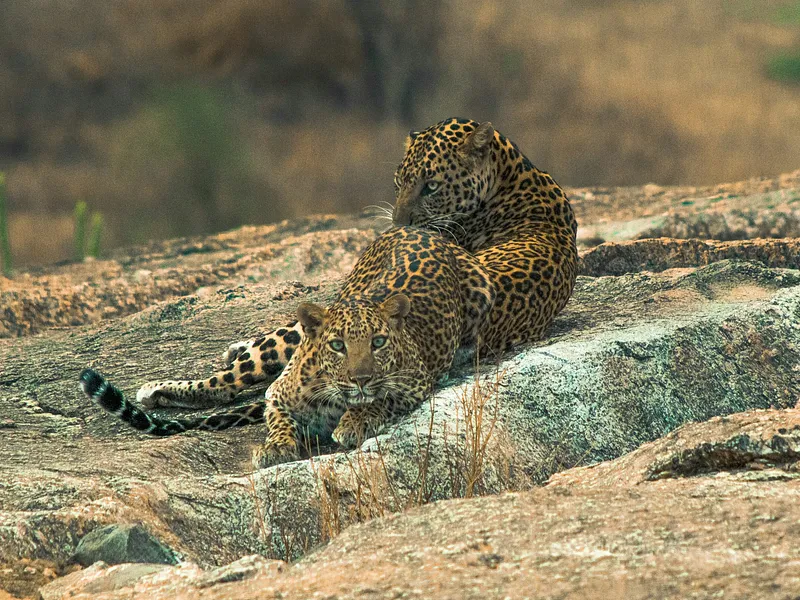
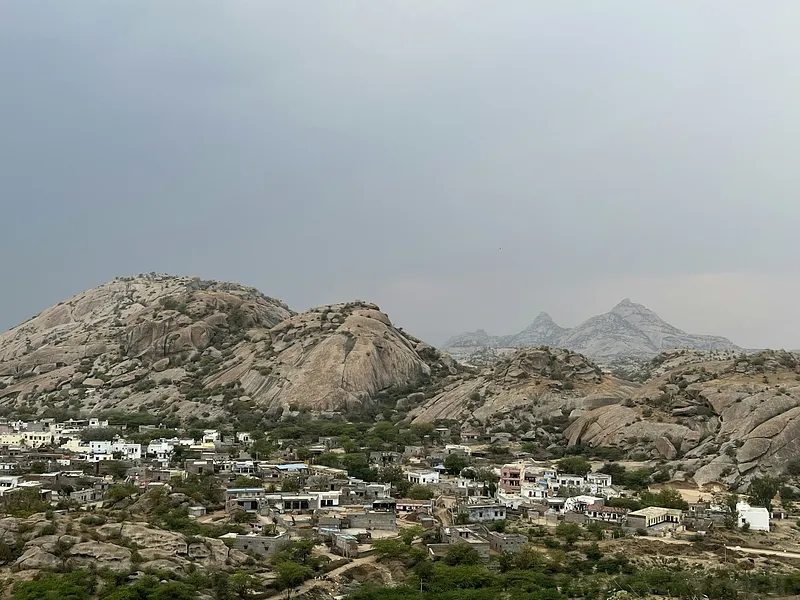
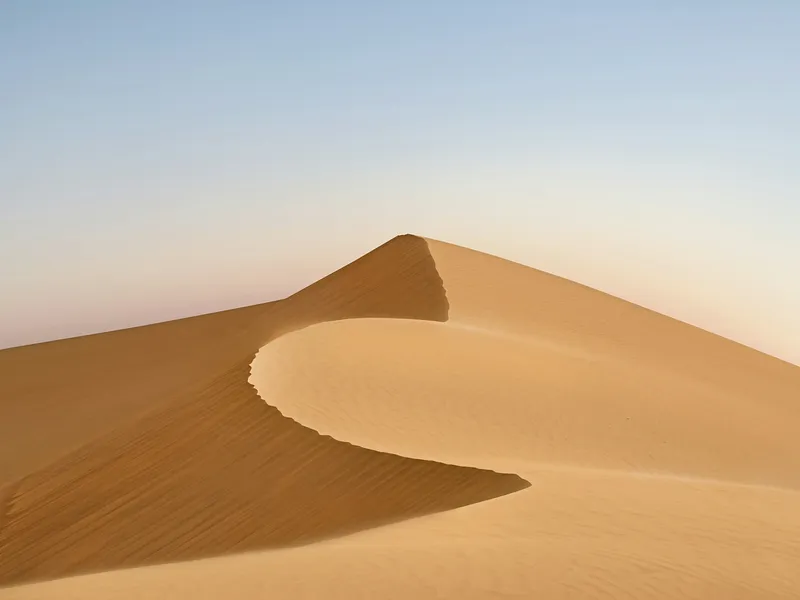
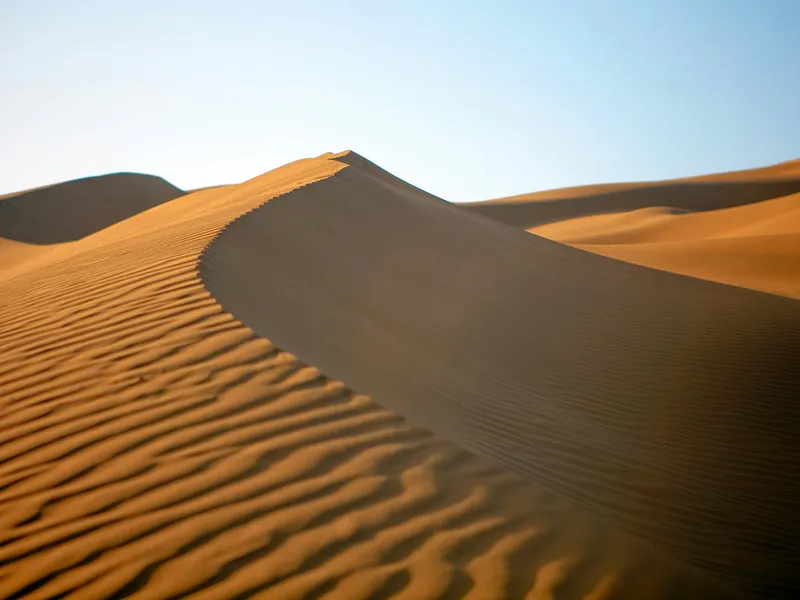
The Aravalli Range divides the drier Thar Desert from relatively greener southeastern Rajasthan. Seasonal rivers, scrub forest and artificial lakes supported capitals including Udaipur, while western settlements depended on tanks and stepwells. Ranthambore National Park protects dry deciduous habitat where Bengal tigers share territory with leopards, sambar deer and marsh crocodiles.

Fact Guru Shikhar in the Aravalli Range reaches 1,722 metres above sea level.

Turning points

  1. c. 2600 BCE

    Kalibangan flourishes

    A planned Indus civilisation settlement develops beside the Ghaggar River.

  2. 1156

    Jaisalmer founded

    Rawal Jaisal establishes a fortified capital on Trikuta Hill.

  3. 1459

    Jodhpur founded

    Rao Jodha begins Mehrangarh and moves Marwar’s capital to Jodhpur.

  4. 1568

    Chittorgarh falls

    Akbar captures Mewar’s fortified capital after a prolonged Mughal siege.

  5. 1727

    Jaipur established

    Sawai Jai Singh II creates a planned capital south of Amber.

  6. 1818

    British treaties expand

    Rajput states accept British paramountcy while retaining princely rulers.

  7. 1949

    Rajasthan unified

    Major princely states join Greater Rajasthan within independent India.

Discover

Experience Rajasthan

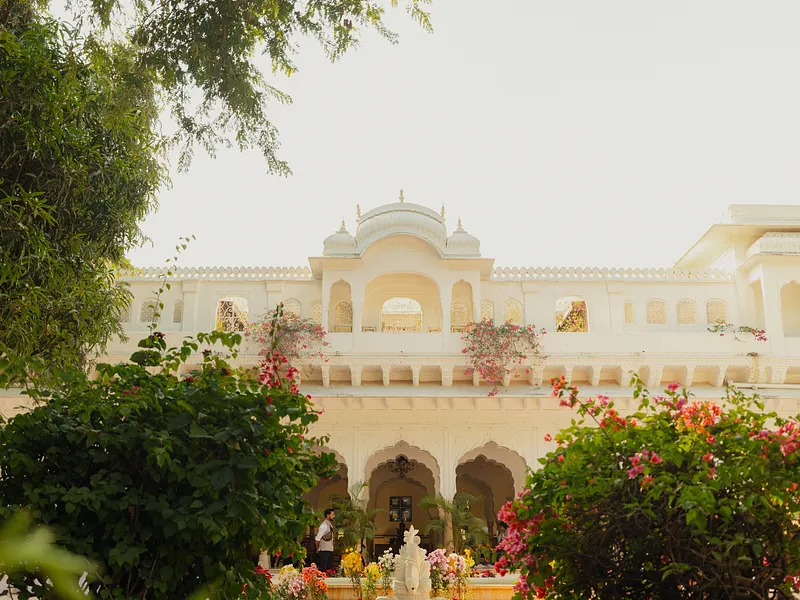
Days move between Jaipur’s observatories, Jodhpur’s blue lanes, Udaipur’s lakes, Jaisalmer’s sandstone walls, Pushkar’s ghats and Ranthambore’s tiger country.

Amber Fort

Jaipur

Amber Fort

Raja Man Singh I began this hilltop palace complex in 1592.

Hawa Mahal

Jaipur

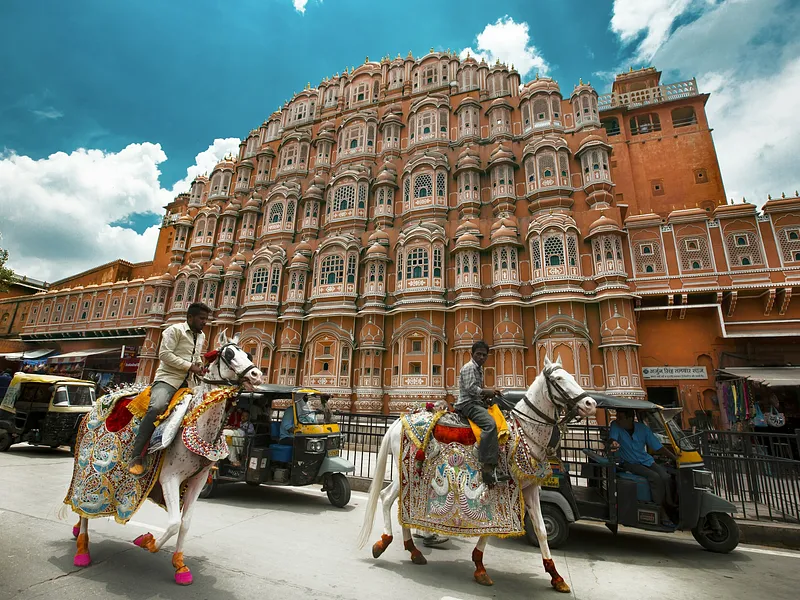
Hawa Mahal

Sawai Pratap Singh commissioned its 953-window sandstone façade in 1799.

Mehrangarh Fort

Jodhpur

Mehrangarh Fort

Rao Jodha founded this cliff-top Rathore stronghold in 1459.

City Palace

Udaipur

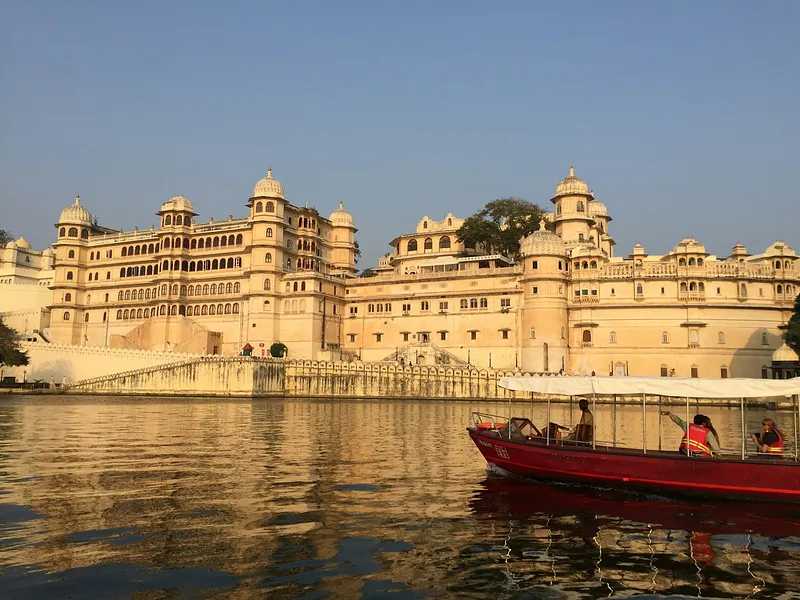
City Palace

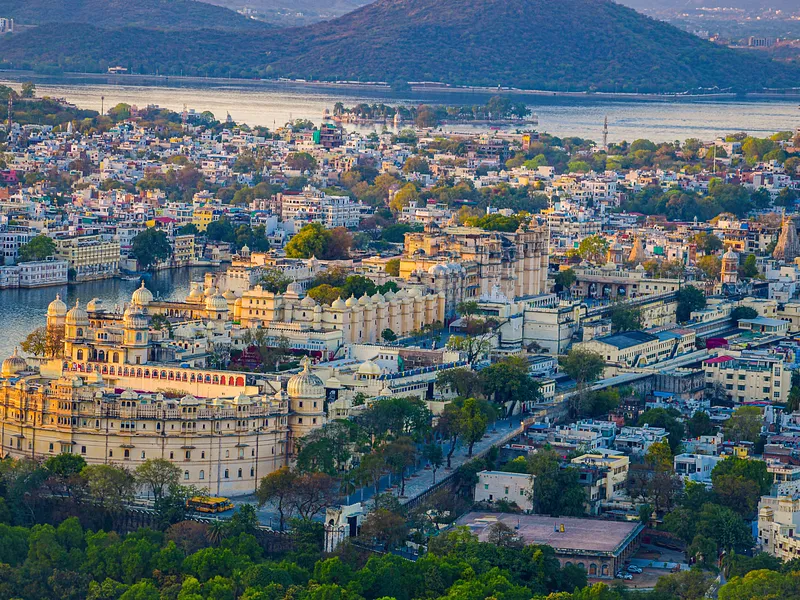
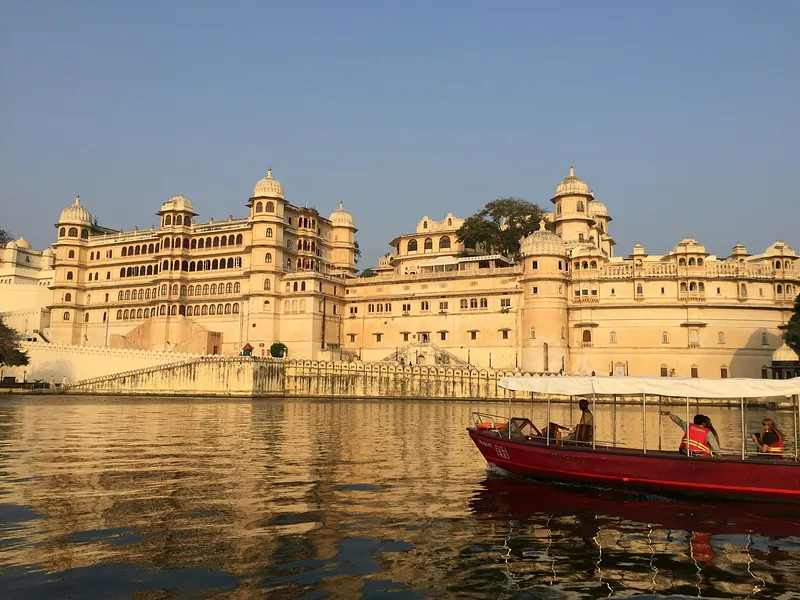
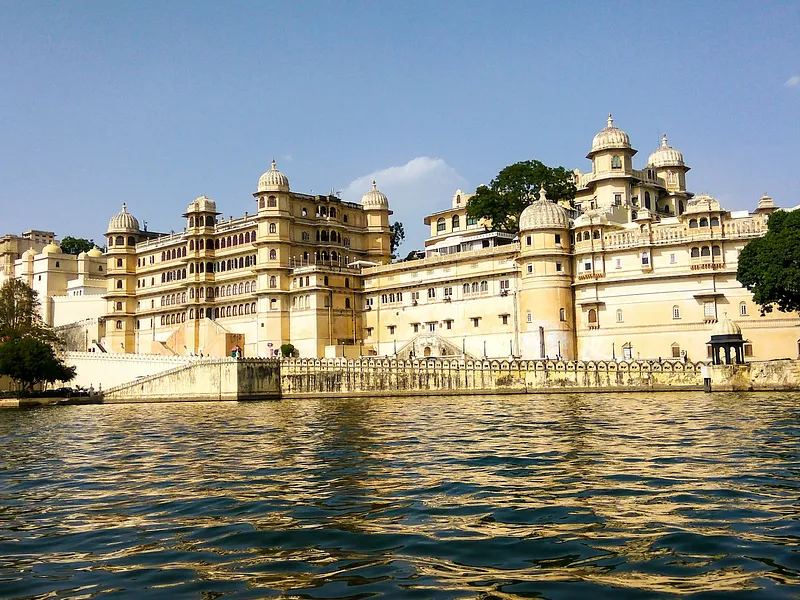
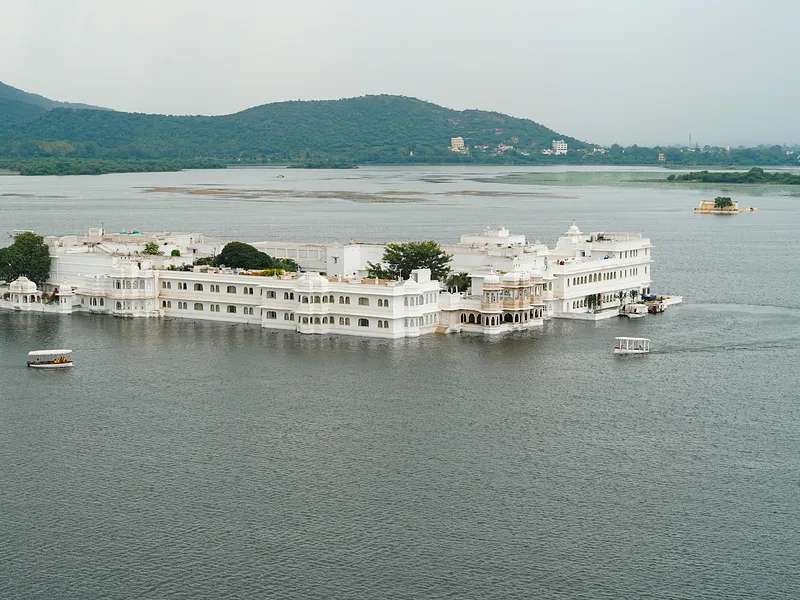
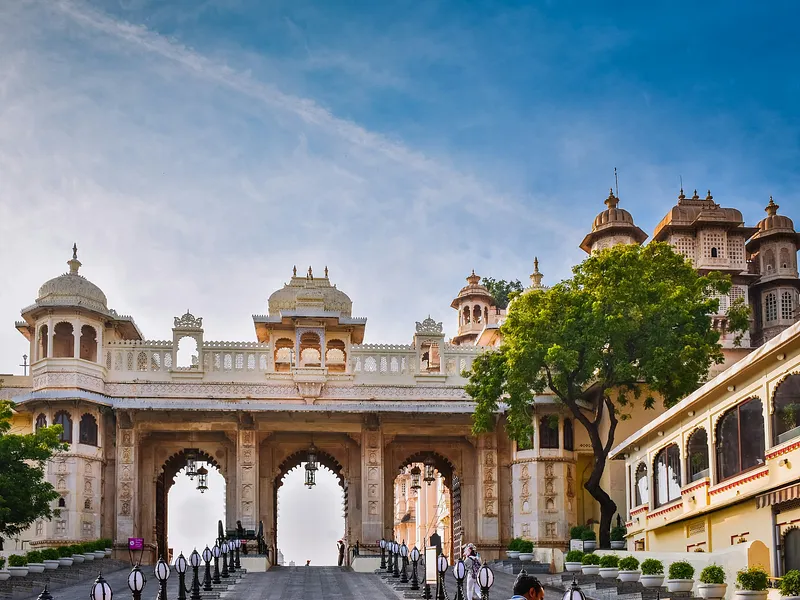
Maharana Udai Singh II began this Lake Pichola palace complex in 1559.

Jaisalmer Fort

Jaisalmer

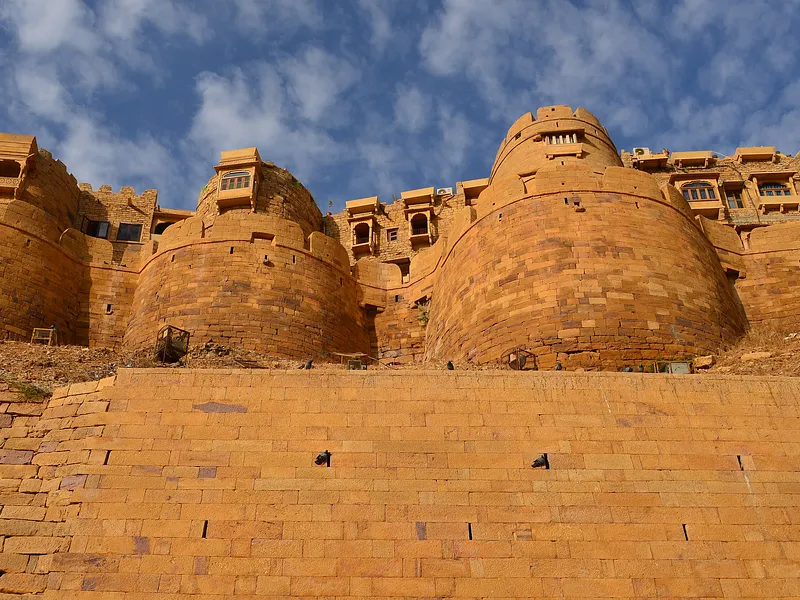
Jaisalmer Fort

Rawal Jaisal founded the inhabited yellow-sandstone citadel in 1156.

Ajmer Sharif Dargah

Ajmer

Ajmer Sharif Dargah

This major Sufi shrine contains the tomb of 12th-century saint Muinuddin Chishti.

Ranthambore Fort

Sawai Madhopur

Ranthambore Fort

This UNESCO-listed Chauhan fortress overlooks Ranthambore National Park from a 700-foot hill.

Chittorgarh Fort

Chittorgarh

Chittorgarh Fort

The 700-acre citadel served as the Sisodia capital of Mewar until 1568.

On the table

Food & culture

  • Cover shoulders and knees when entering temples, mosques and dargahs.
  • Remove shoes before entering religious interiors or private prayer spaces.
  • Use the right hand when offering money, food or religious donations.
  • Ask before photographing worshippers, rural residents or people in ceremonial dress.

Plan

Plan Your Journey

Things to do

  • Join a dawn jeep safari through Ranthambore’s numbered wildlife zones
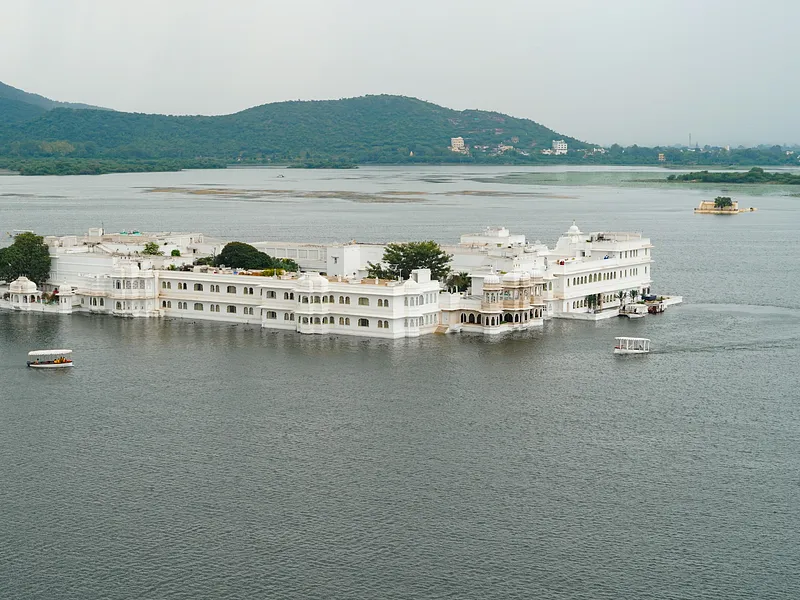
  • Take a sunset boat ride across Udaipur’s Lake Pichola
  • Walk Jodhpur’s blue lanes with a local heritage guide
  • Ride into the Thar Desert for an overnight camel camp
  • Browse Jaipur workshops for block printing, gemstones and blue pottery
  • Attend the evening aarti beside Pushkar Lake

Getting there and how long to stay

ten to fourteen nights for the six-area first route is what the place is worth — not how long our trips happen to run.

Jaipur International Airport is the principal gateway, with domestic flights also serving Jodhpur, Udaipur and Jaisalmer seasonally. Delhi–Jaipur trains and National Highway 48 provide frequent access. Long-distance trains connect Jaipur with Jodhpur, Udaipur and Jaisalmer; Sawai Madhopur station serves Ranthambore, while Ajmer station is the main railhead for Pushkar.

Getting around

Jaipur Metro covers a limited urban corridor, while autos, app taxis and hired cars handle most city travel. Trains work well between Jaipur, Jodhpur, Jaisalmer, Ajmer and Sawai Madhopur. A private car is useful for Udaipur’s surroundings and desert stops. Ranthambore safaris use officially assigned canters or Gypsies booked by zone.

Who it suits

  • First-time visitors to India Jaipur combines Rajput palaces, Mughal-era forts, bazaars and reliable links with Delhi and Agra.
  • Architecture and history travellers Mehrangarh, Amber, Chittorgarh and Jaisalmer preserve distinct Rajput responses to warfare, trade and Mughal power.
  • Wildlife travellers Ranthambore offers scheduled tiger safaris among dry forest, lakes and a 10th-century hill fort.
  • Photographers Jodhpur’s blue quarter, Udaipur’s lake palaces and Jaisalmer’s golden sandstone create sharply different settings.
Currency
INR
Dialling code
+91

Emergency numbers

112 Integrated emergency response
100 Police
101 Fire
102 Ambulance
1363 Tourist helpline

Your trip manager confirms embassy contacts and local numbers for your own route before you travel — these change by state and city.

Visa and entry rules depend on your passport. Ask us what you'll need.

Questions, answered

When is the best time to visit Rajasthan?
October to March brings cooler sightseeing weather. December and January nights can be cold, especially in Jaisalmer, Jodhpur and desert camps.
Do Indian citizens need a visa for Rajasthan?
No. Rajasthan is domestic travel for Indian citizens. Foreign passport holders need the appropriate valid visa for India.
Which languages are useful in Rajasthan?
Hindi is widely understood, while Marwari, Mewari, Dhundhari and other Rajasthani languages are common. Tourism businesses generally manage basic English.
Is Rajasthan safe for travellers?
Established tourism routes are generally manageable. Use registered transport, confirm prices, guard belongings, avoid isolated streets after dark and skip overnight road journeys.
What clothing should be packed?
Carry light, modest clothing, sun protection and comfortable shoes. Add warm layers from November to February and rain protection during the monsoon.
What should travellers do in an emergency?
Call 112 for integrated emergency assistance. Police, fire and ambulance services also retain separate numbers; hotels can contact local tourist police.

Get ready

Take this

  • Breathable, modest clothing for forts, temples and towns
  • Comfortable closed shoes with good grip
  • High-SPF sunscreen, sunglasses and a sun hat
  • Reusable water bottle and oral rehydration salts
  • Personal medicines in labelled packaging
  • Government-issued photo identification

You may need this

  • Warm layers for winter mornings and desert nights
  • Light rain jacket for July through September
  • Neutral clothing for Ranthambore wildlife drives
  • Scarf or face covering for desert dust
  • Motion-sickness medicine for winding Aravalli roads
  • Binoculars for Ranthambore and Keoladeo

Don't forget

  • Phone charger and charged power bank
  • Type C, D or M plug adapter
  • Hotel and transport confirmations saved offline
  • Prescription copies for essential medicines
  • Small cash for markets, tips and rural stops
  • Lip balm and moisturiser for dry weather

Check before flying

Baggage allowances, liquids, power banks and battery rules differ by airline and by route, and they change. We publish them here only once we have checked them against the airline's own page — until then, check your airline directly, and your trip manager will confirm anything unusual on your route.

Practical reference

Your time

7:11 PM

Asia/Kolkata

In Rajasthan

7:11 PM

Asia/Kolkata

Currency
INR (₹)

ISO 3166 / 4217

Official languages
Hindi, English

ISO 3166 / 4217

Time zone
Asia/Kolkata

IANA time zone database

Plugs, SIM cards, tipping and embassy contacts are not here yet — we will not publish those until each one is verified against an official source. Your trip manager has them for your route in the meantime.

Still deciding

Ask about Rajasthan

Answered from everything on this page. For anything it cannot answer, a real trip manager will.

Try: “Which month should I visit?” · “How much should I budget?” · “What should I pack?” · “What food should I try?”